
The Zonvarken concept originated from a brainstorming session on a new pig farming system that uses innovation to meet the pigs’ needs. Zonvarken is a revolutionary, small-scale pig farm comprising a maximum of 50 sows per site. It demonstrates that maximum animal welfare, minimal emissions of CO2, ammonia, particulate matter and odour, and a healthy income for the farmer can go hand in hand. Zonvarken is a cooperative of pig farmers who want to rear pigs in a different way. Zonvarken pigs are kept in Zonvarken stables and live in stable groups and family systems. This means that brothers, sisters, cousins and nieces and nephews stay together throughout their lives.
Thanks to this extra focus on animal welfare, the Zonvarken concept has been awarded 3 stars by the Beter Leven quality mark.
5 Pillars
Zonvarken is based on 5 pillars: animal-friendly, environmentally friendly, climate-friendly, farmer-friendly and neighbourhood-friendly. Zonvarken therefore has a compelling story to tell for pigs, farmers, neighbours and consumers.
Pillar 1: Animal-friendly
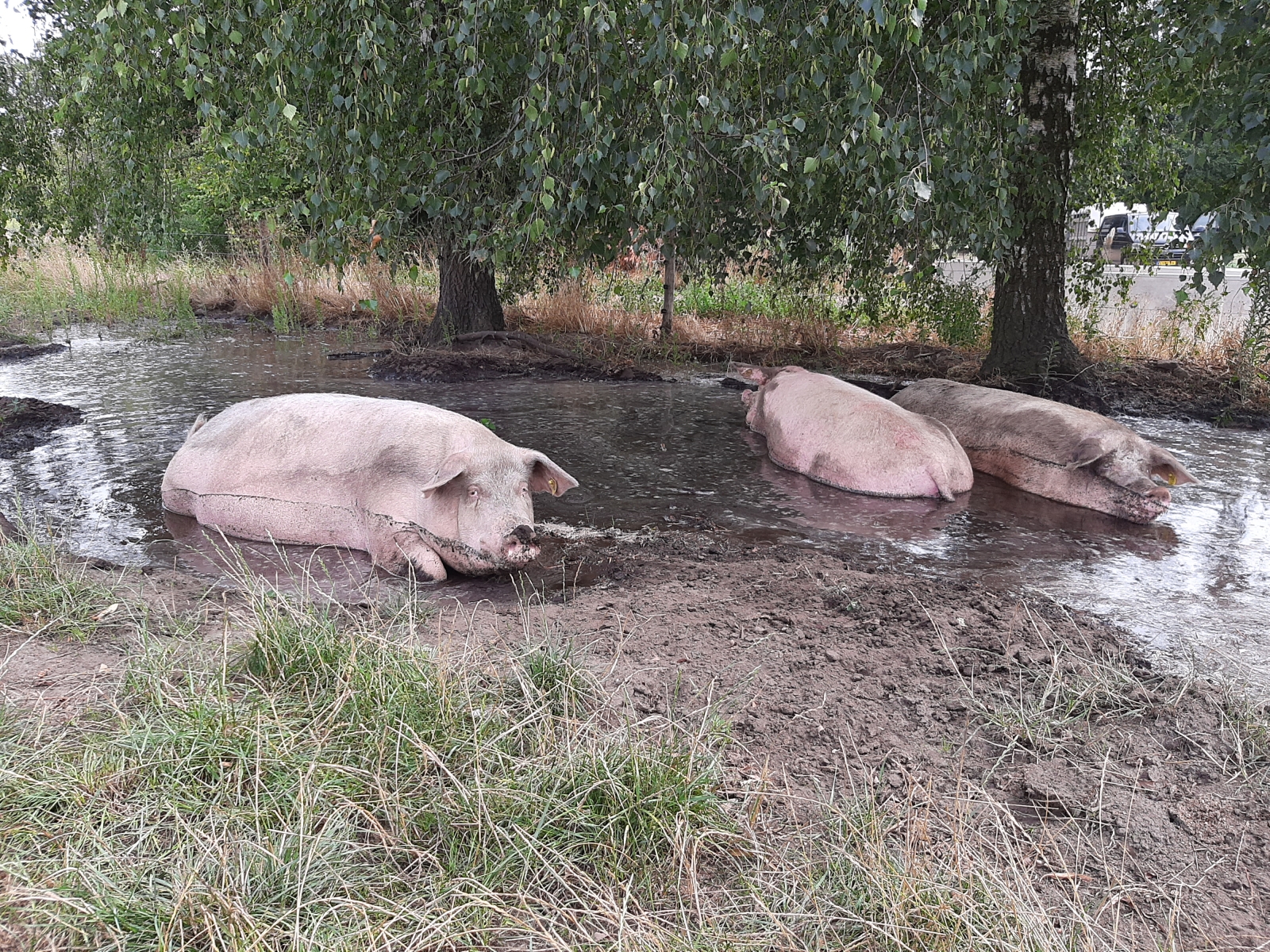
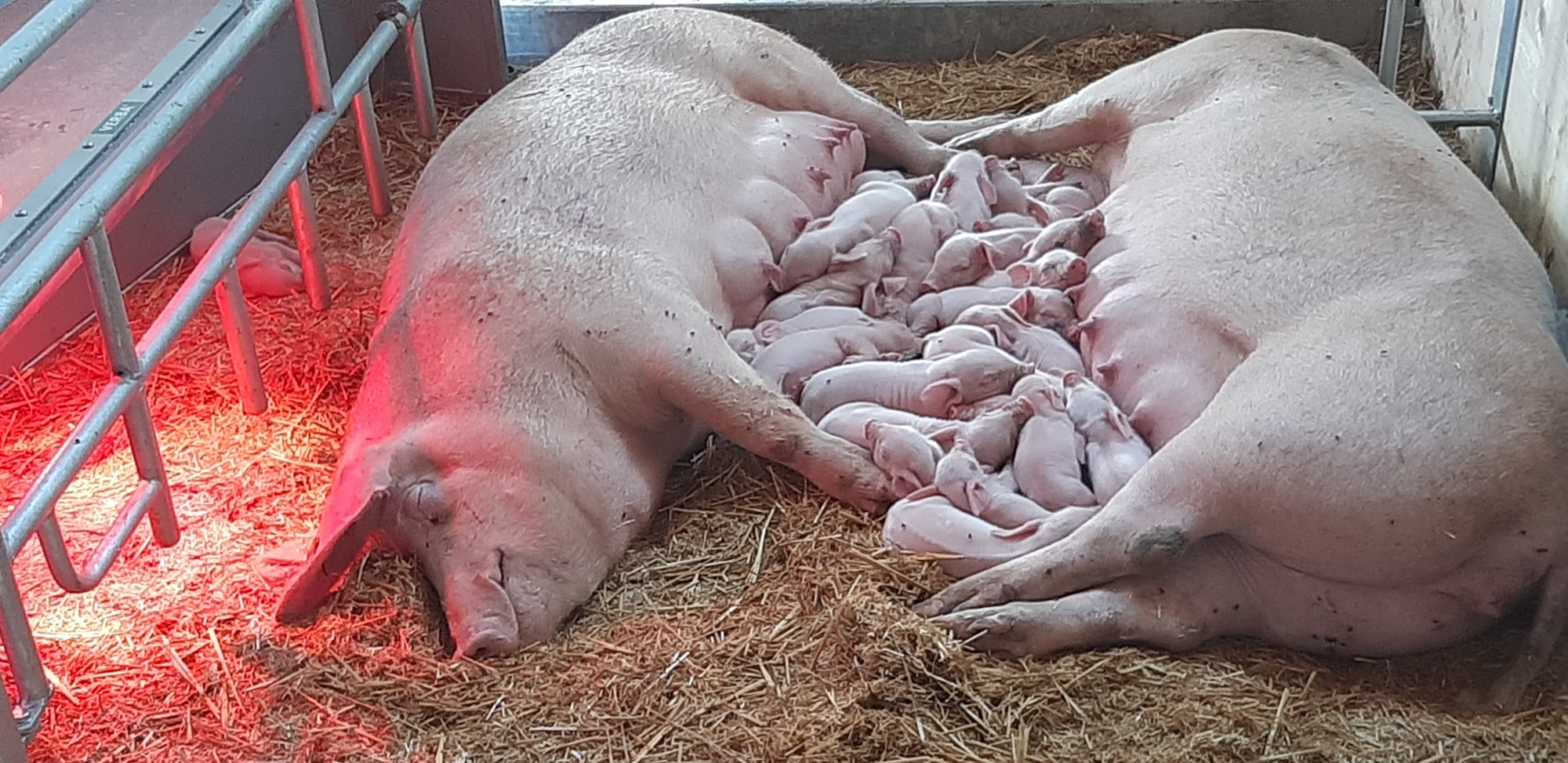
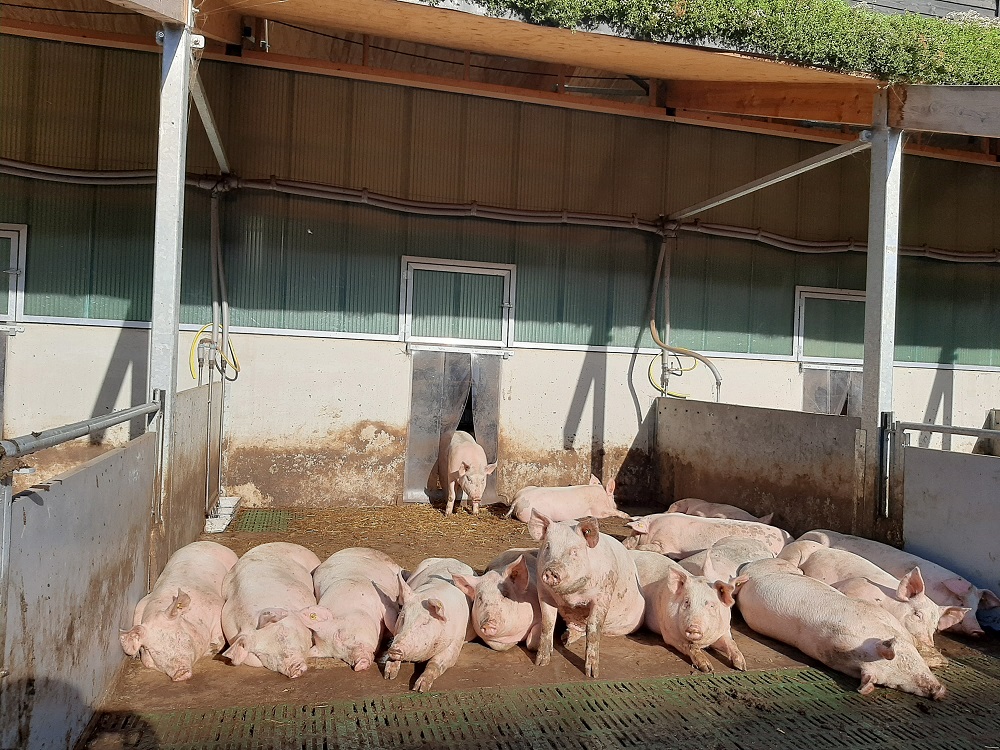
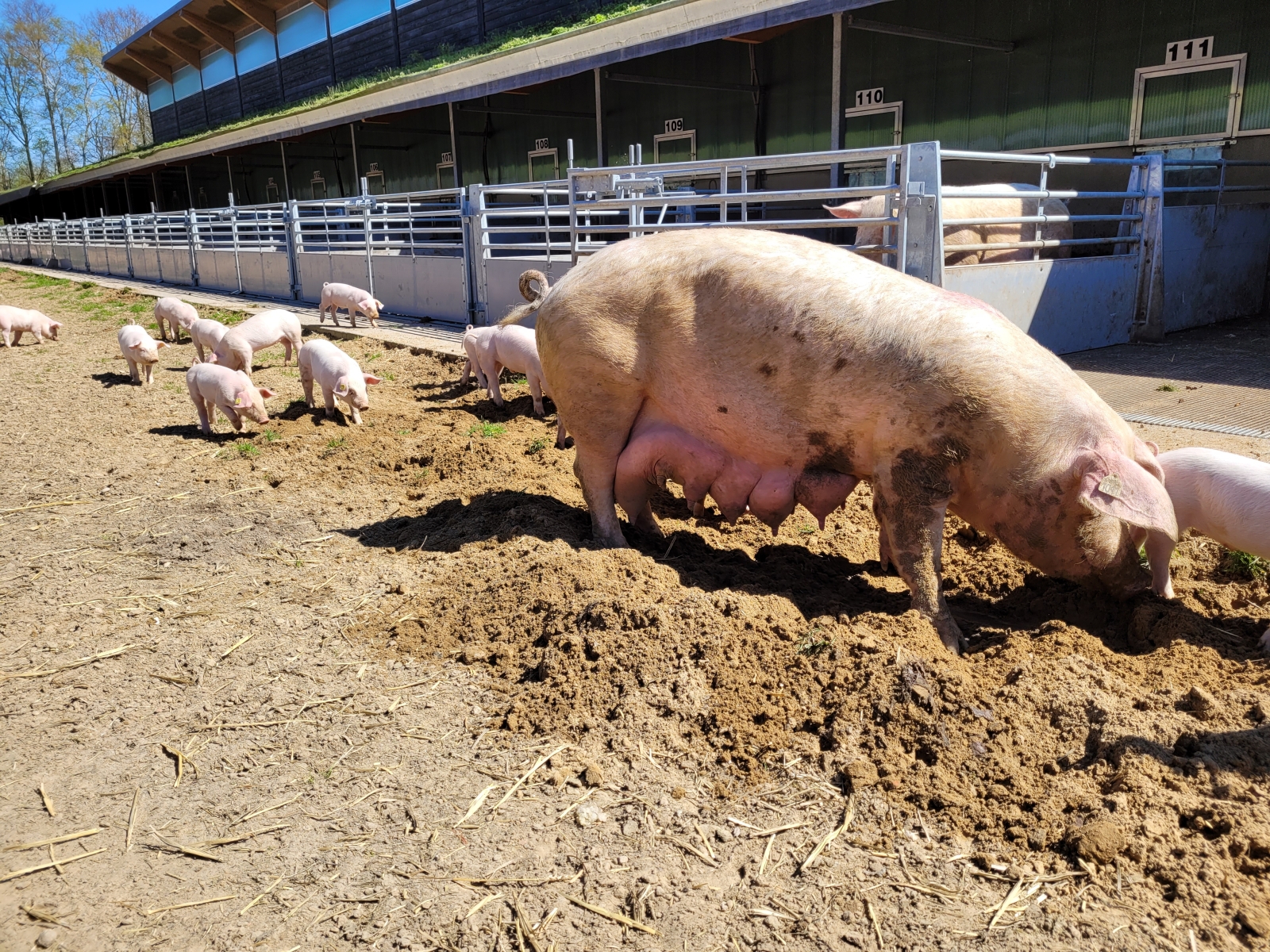
Zonvarken piggeries are designed around the pig’s needs. The design of the Zonvarken piggery takes the natural instincts and needs of pigs into account as much as possible. Just like organic pigs, Zonvarken pigs are permitted to use the 3-star Beter Leven quality mark, but the Zonvarken system goes beyond the criteria set out for the 3-star Beter Leven standard. For example, at Zonvarken, piglets stay with the sow for longer than required and also longer than with organic pigs, and brothers, sisters, cousins and nephews remain together until slaughter.
Sows are always free-range, even during farrowing. Indoors, the pigs are housed on straw, and there is also permanent access to a (paved) outdoor run. All pens are designed to have four zones: for sleeping, feeding, playing and fattening. Weather permitting, the piglets and fattening pigs are given access, periodically but at least once in their lifetime, to ‘the piglet playground’, an unpaved grassy area between the stables, so that they can really root around in the earth.

What makes Zonvarken so animal-friendly?

Pillar 2: Environmentally friendly
Innovations are used to minimise or prevent emissions of ammonia, particulate matter and odours.
Zonvarken uses a manure separation system, which means there is virtually no odour nuisance. The sedum roof gives the farm a natural look, is attractive to birds, butterflies and insects, increases biodiversity and also captures a significant amount of particulate matter.
Through the innovative Separate Floor system, manure and urine are separated immediately, and the manure is removed from the barn several times a day. This daily manure removal ensures that ammonia emissions are minimised. As a result, the valuable nutrient nitrogen remains on the farm and is ultimately returned to the fields via the manure as plant fertiliser.
Pillar 3: Climate-friendly
Zonvarken pork is sustainable and produced in a climate-friendly manner. The transport of animals, the transport and processing of pig feed, and heating all require energy and result in CO2 emissions. Zonvarkens are fed with feed made from waste streams, which means the feed has a lower CO2 footprint than ‘conventionally grown’ pig feed. Zonvarken aims to fully offset the CO2 still ‘generated’ by the circular feed and the CO2 released during all other aspects of keeping Zonvarkens on the farms through the following innovations:
- Trees have been planted around Zonvarken stables to capture CO2 and also serve as shelter and enrichment for the sows in the outdoor run.
- The roofs of Zonvarken stables are covered with sedum, a plant that absorbs large amounts of CO2.
- Solid manure and urine are separated immediately and removed from the barn. In addition to significantly lower ammonia emissions, this also results in a substantial reduction in the greenhouse gas methane.
- All births in a Zonvarken barn take place simultaneously at two specific times of the year, meaning heating is only required during those weeks. As a result, energy consumption in the barn is minimal.


Pillar 4: Farmer-friendly
Zonvarken farmers receive fair remuneration and help out on each other’s farms during holidays. The small scale of the Zonvarken concept (50 sows and their piglets) allows for a good work-life balance.
Pillar 5: Neighbourhood-friendly
At Zonvarken, we don’t talk about mega-barns, but about small-scale farms with 25 sows and their piglets per barn. A Zonvarken farm can consist of one or two barns. The barns are spacious, designed to provide more space per animal. The design of the Zonvarken farm, with wooden trusses and a green sedum roof, blends well into the landscape. Every Zonvarken farm has an orchard for the sows. The sedum roof and the wooden building materials used in the barn ensure good sound insulation.


Circular pig feed
Zonvarkens are fed:
- Feed that does not compete with food for human consumption.
- Made from food waste and by-products.
- With a carbon footprint up to 60% lower.
- For which no agricultural land has been directly used.
- Free from grains, soya meal or other ingredients grown specifically for animal feed.
Separation of manure and urine
In all Zonvarken piggeries, manure is separated immediately. This results in:
- No detectable phosphate in the liquid fraction.
- Minimal ammonia formation (nitrogen) as the formation of slurry is prevented.
- Maximum reduction in methane formation and odour!
- Less nitrogen leaching compared to artificial fertiliser and slurry.
- Coarse manure is better for biodiversity in the fields.