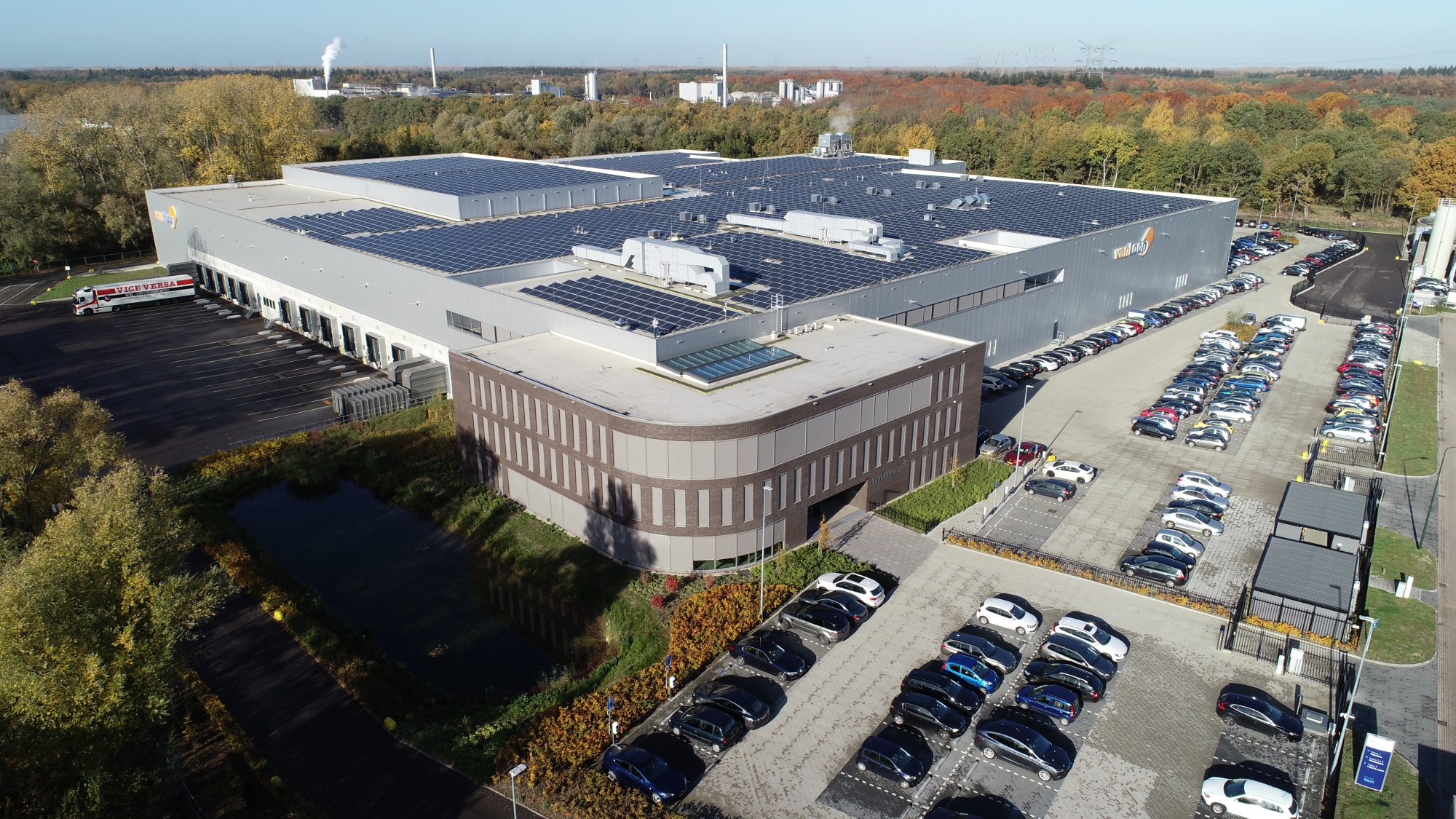
The Dutch ACM (Authority for Consumers and Markets) has approved the merger between Van Rooi and Van Loon Group – pending approval from two European competition authorities.
09 April 26
News

Are you interested in our chain concepts? Log in with your email address and password or contact our livestock team.
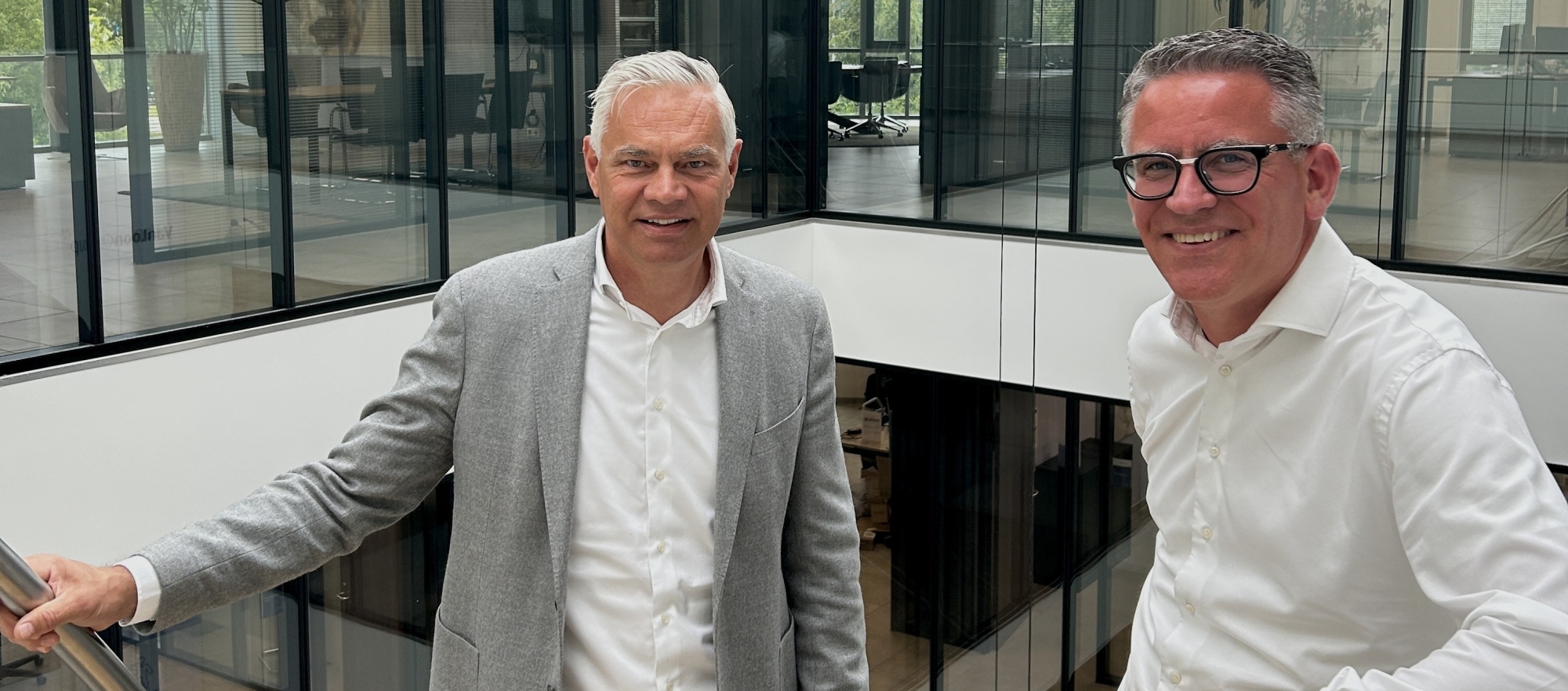
From CSR to CSRD: starting pragmatically, professionalising together.
Van Loon Group has been publishing a CSR report for fifteen years – well before CSRD appeared on the media radar. But what once began as a pragmatic way of putting sustainability into practice has since become an integral part of the company’s operations. CSO Roland van Loon and CFO Pieter Geraerts are increasingly working in tandem on this. Their collaboration demonstrates how sustainability and finance reinforce one another – provided the numbers add up.
“We have been involved in CSR for a very long time, in the broadest sense of the word,” says Roland van Loon, CSO of the producer of sustainable meat and convenience products and a member of the family. “This was our fifteenth annual CSR report. And right from the start, we have taken a very pragmatic approach to it. No idealistic visions: everything we set out to do, we actually do.”
That long history means that sustainability at Van Loon Group did not arise from regulation, but from the business itself. “Many companies now start with finance because they have to,” adds Pieter Geraerts, who has been CFO for over 10 years: “CSRD, compliance. For us, it came from the business itself. And now we’re increasingly working together.”
Things did pick up pace, though, about two years ago. Van Loon: “Partly with CSRD in mind, too. That’s when we further refined our strategy, particularly regarding data points. We mapped out what data we needed and assigned responsibility for it within the organisation.”
Geraerts adds: “And that automatically leads you to finance. Because it all has to be auditable. That requires structure and discipline. As a result, sustainability and finance naturally converge.”
Sustainability as an integral part of the organisation
This far-reaching integration is reflected in the way sustainability is organised at Van Loon Group: “We have four pillars, under which there are eighteen themes,” explains CFO Geraerts. “These are embedded throughout the company, from R&D to operations and finance. Everyone has KPIs and responsibility for data.”
Van Loon emphasises that this only works if it truly becomes part of day-to-day practice. “When you’re just starting out, you have to keep it small. But with fifteen years of history, it grows naturally. For us, it’s simply part of our business operations.”
This approach also fits well with the sector in which Van Loon Group operates, according to the CSO: “As a producer of meat products, you’re inevitably under the microscope. So you have to show that you’re taking concrete steps, not just on paper.”
The consumer decides: taste above all
One of the ways in which Van Loon makes sustainability tangible is through product innovation, such as hybrid meat products. This is a sensitive topic, but according to Van Loon, the debate often becomes too theoretical: “There’s a lot of discussion about it, but ultimately it’s the consumer who decides. And they look at taste first.”
Both the CSO and the CFO analyse different types of data. Geraerts: “Our hybrid products are often perceived as tastier. Just a little more succulent than pure beef.”
But ‘perception’ also translates into data. Van Loon: “If you emphasise too strongly on the packaging that something is a hybrid product, people actually won’t buy it. We can see from the figures exactly when we make the biggest impact. And that is: when people simply give it a try – and appreciate it for what it is. Ultimately, it’s simple: it has to be tasty, available and affordable.”
The supply chain as the key: transparency and profitability
A crucial part of the strategy is collaboration throughout the supply chain, including transparent pricing models. And that is precisely where Geraerts and his finance team add value: “Farmers can opt for a long-term model. Under this model, 50 per cent of the price is market-based and 50 per cent is cost-plus. That way, they always earn something whilst remaining connected to the market. Ultimately, money only comes in from one place: the supermarket checkout. Everything leading up to that has to be paid for from that, including animal welfare and CO₂ reduction.”
That logic also extends to customers, adds Van Loon: “We’ve agreed on that back-to-back. With transparent models for the animal, slaughter and packaging. But sustainability also means ensuring that everyone in the supply chain has a decent revenue model.”
Ambition and realism: leading the way without getting ahead of yourself
The biggest challenge in sustainability and CRSD lies, as with many companies, in Scope 3. “For us, almost 99 per cent of the carbon footprint is in meat,” says Geraerts. “So that’s where we’re making the biggest strides.” Van Loon: “But we now measure that very precisely, using blockchain among other things, and we have programmes in place to reduce that footprint.”
However, the rest of the supply chain is more difficult to manage, according to the CFO: “We don’t always have primary data for smaller suppliers. And reduction programmes are complex in that area.”
Innovation and experimentation
Innovation requires choices – choices that aren’t easy, but which must be made: “You can’t do everything at once. So you focus on where the impact lies. At the same time, it’s all about balance. You can’t be a frontrunner if you wait for customers to make the first move. But you mustn’t get so far ahead of the pack that it becomes unaffordable either. We work a lot with pilot schemes. If something works, we scale it up. If not, we learn from it and try again.”
Meanwhile, the finance team ensures that it all remains scalable. Geraerts: “And as CFO, I do notice the advantage of working for a family business. We continue to invest, even if it doesn’t pay off straight away. The basic principle is: the numbers have to add up; then progress will follow naturally.”
Source: CFO.nl